

![[image]](https://WFMJ.images.worldnow.com/images/19931244_G.jpg)
Governor DeWine has updated efforts to keep track of the spread of COVID-19 in Mahoning and Trumbull Counties, as well as 34 other communities through the Ohio Coronavirus Wastewater Monitoring Network.
The governor said that since the launch of the program tests have shown a sustained increase in gene fragments of COVID-19 in wastewater samples from Dayton, Columbus, Akron, Oregon, Sandusky, and Mansfield. Those communities have received notifications from the Ohio Department of Health.
Those infected with COVID-19 begin to shed the virus early in their infection, and a significant, sustained increase in gene fragments found in wastewater can be an early warning sign of a pending rise in COVID-19 cases in a specific area. The value of this information is that gives communities an opportunity to act proactively to prevent outbreaks.
Seven samples have been submitted since August 2 from the Youngstown Wastewater Treatment plant which includes waste from Youngstown, as well as parts of Liberty, Austintown, Canfield, Boardman, and Coitsville Townships.
The latest Youngstown sample taken on September 15 shows 510,000 million gene copies, or MGC per day, which is the measurement used to compare the changes in gene fragments in various samples.
That is an increase from the 160,000 MGC per day from the week before. The change did not trigger a warning from state health officials.
Only one sample has been submitted by the Warren Water Pollution Control Facility. That sample of 190,00 MCG per day taken on September 7 will be compared with subsequent samples to see if there is any significant increase to indicate if there should be any concerns over a possible COVID-19 in Warren and other communities including Champion and Lordstown which are served by the wastewater facility.
There are several factors to consider when interpreting viral data in wastewater.
Because scientists are still learning about the timing and rate of shedding of the virus RNA in feces of infected people, it is only appropriate to monitor and observe the trends of viral gene copies detected in a community over time.
Because infected individuals can continue to shed the virus RNA in feces for 20 to 30 days after they are no longer infectious, decreases in the number of viral gene copies in wastewater might lag behind decreases in cases in a community.
Trends in viral gene copies should be considered along with community case numbers and other COVID-19-related data to inform decisions about taking actions to help limit disease spread.
ODH plans to add 25 more monitoring sites will be added during the coming month. Communities found with a sustained increase in gene fragments are offered testing and contact tracing assistance.
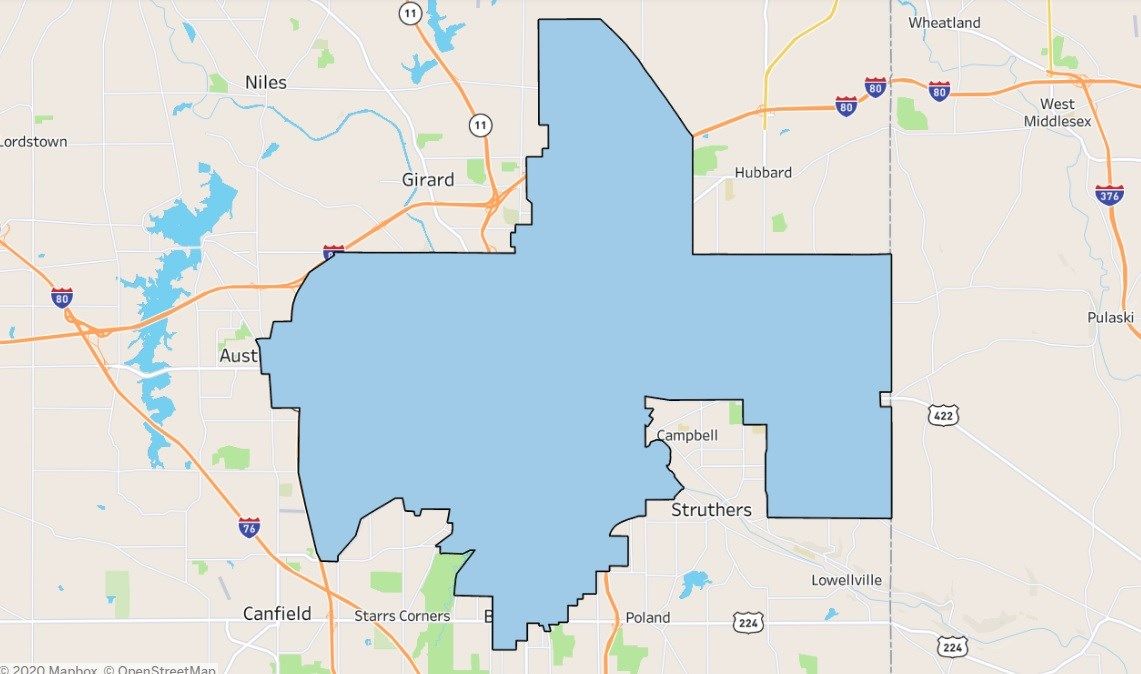
Youngstown Wastewater Treatment map
