
Former Youngstown Mayor McNally disciplined by Ohio Supreme Court
Former Mahoning County Commissioner and Youngstown Mayor John A. McNally has to be on his best behavior for the next six months if he wants to continue practicing law.
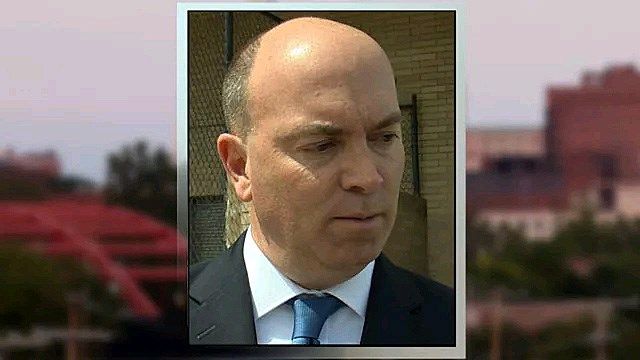
COLUMBUS, Ohio - Former Mahoning County Commissioner and Youngstown Mayor John A. McNally has to be on his best behavior for the next six months if he wants to continue practicing law.
The Ohio Supreme Court issued a one-year suspension of McNally's law license based on criminal convictions for his role in what has become known as the Oakhill scandal.
The Supreme Court disregarded the Board of Professional Conduct’s recommendation that McNally only receives a public reprimand, and issued a one-year suspension.
However, the Justices stayed the license suspension for six months, provided that McNally refrains from further misconduct. If McNally fails to comply with the conditions the stay would be lifted and he would have to serve the full year of the suspension.
The Mahoning County Bar Association accused McNally of violating several rules governing the conduct of Ohio attorneys when he served as a county commissioner in 2006 and 2007.
McNally, former Mahoning County Auditor Michael Sciortino, and attorney Martin Yavorcik were convicted of taking part in a plot to hinder efforts by Mahoning County to purchase what became known as the Oakhill Renaissance Place and subsequently tried to cover up the criminal activity.
McNally, who lost his re-election bid in the primary election, pleaded guilty to falsification and attempted unlawful use of a telecommunications device.
Neither he nor Sciortino were given jail time but were fined and ordered to perform community service.
Yavorcik's conviction was overturned because an appeals court ruled his trial should have been heard in Mahoning instead of Cuyahoga County.
After completing his sentence, McNally returned to practicing law.
However, the Mahoning County Bar Association filed a complaint saying McNally had violated eight rules. All but two of the charges were dismissed and a three-member board found that McNally had engaged in dishonesty, fraud, deceit, or misrepresentation and that he broke the law.
The Supreme Court said that once a lawyer pleads guilty to criminal charges, those charges can't bee challenged in a disciplinary hearing.
“Those facts cannot be explained away by the parties or the board,” the Court stated in its opinion.
The court's ruling may be read here.
