'Take me out to the ballgame!' A look at how weather impacts baseball games
The Major League Baseball season is the longest of the four major sports leagues, with 162 games spread out over three different meteorological seasons (spring, summer & fall). Most of those games are played in outdoor stadiums, meaning that it’s not surprising to hear that the weather can have a big impact on the results of a game. Of course we’ve all sat through a rain delay or two, but the temperature at game time can play a major role in the amount of home runs hit, and the amount of runs scored.
Cold air is more dense with air molecules packed closer together. This makes it tougher for a baseball to push through the air, helping to drag it to the ground. Warm and humid air is less dense, creating less drag on the baseball, allowing it to travel further. Therefore, it should be easier to hit a homerun during the summer months than during the spring or the fall.
This science was proven true during the 2024 MLB season. The most home runs were hit during the month of August, with the other two months of meteorological summer rounding out the top three.

As the weather became warmer during the summer months, the air was on average less dense, allowing for more balls to carry over the outfield wall.
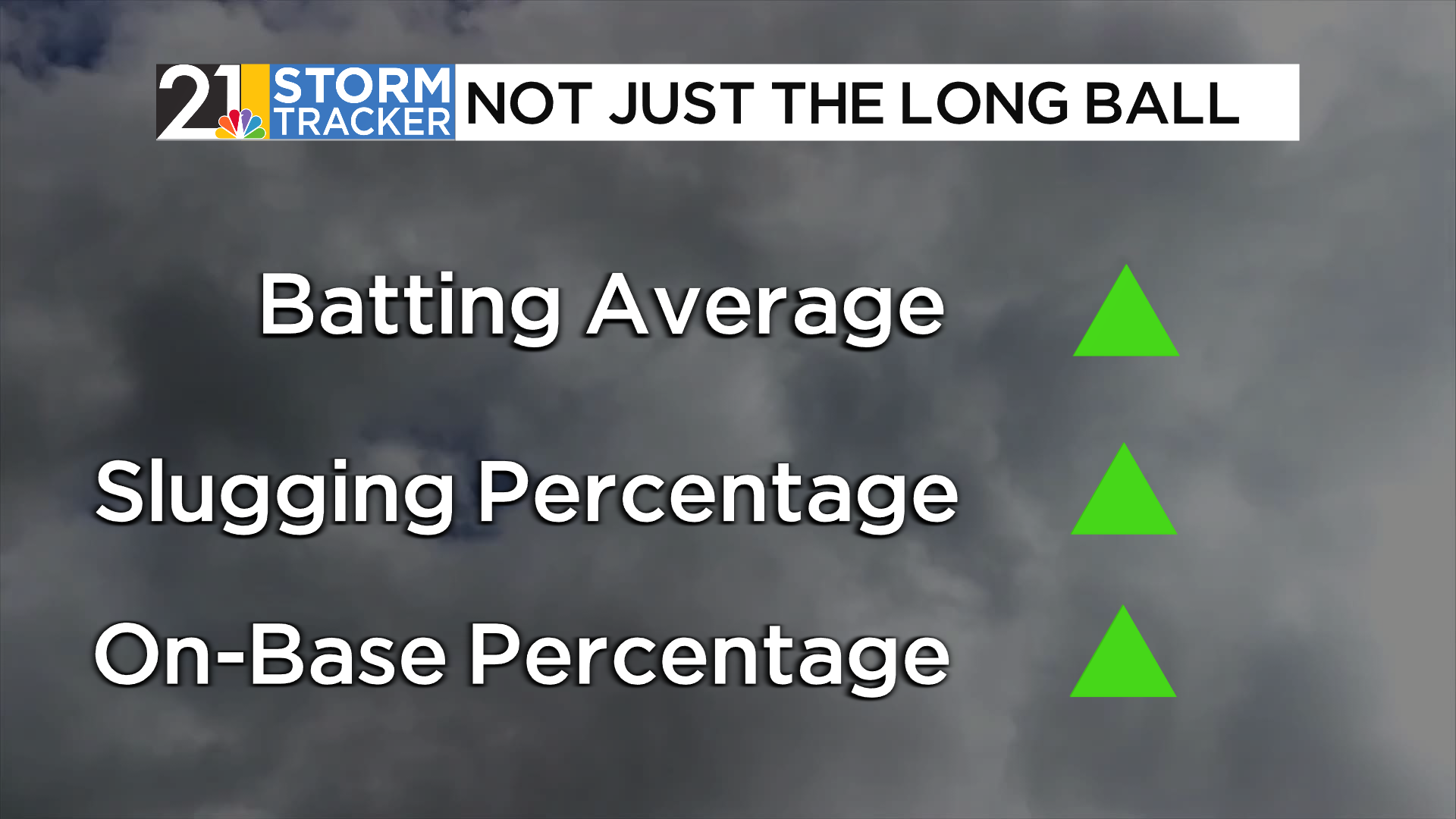
While many have discussed the increase in home runs during the summer before, a 2013 study shows that offensive production as a whole increases in warmer weather. Between 2000-2011, the average MLB game saw a combined 8.95 runs scored during cold weather games. That number jumps to 10.08 runs during warm weather games. Batting average, slugging percentage and on-base percentage all increase during warmer weather as well.
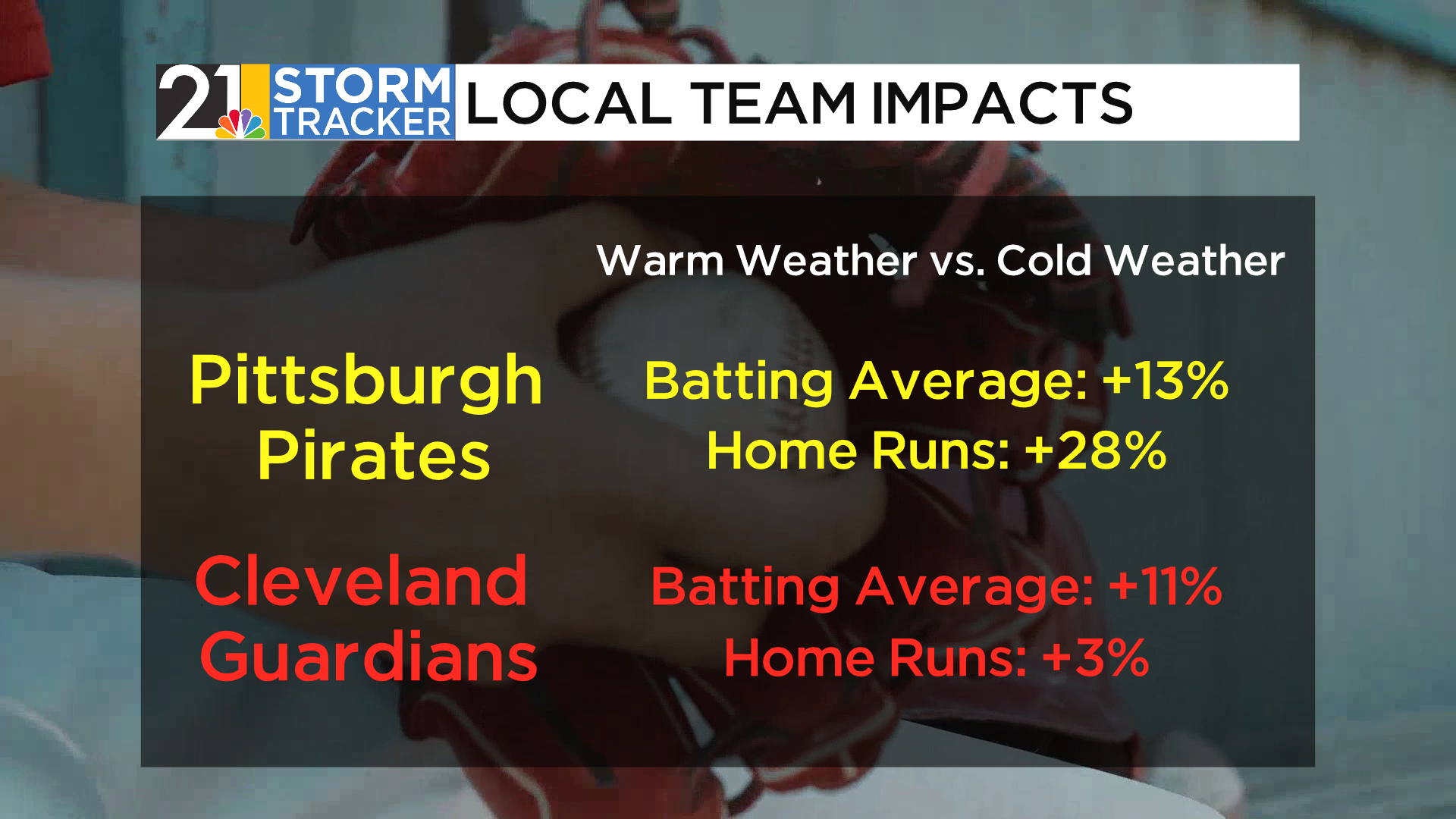
The exact increase was then found for each team during that stretch as well, so let’s take a look at our two (somewhat) local teams. When the weather was warm, the Pittsburgh Pirates saw a 13% increase in batting average and a 28% increase in home runs compared to colder games. The Cleveland Guardians saw a similar increase in their batting average (11%), but more modest numbers when it came to home runs (3%).
Through these numbers and statistics it is clear to see that higher temperatures can lead to more home runs and overall offensive production in baseball games. That now raises the question, as our climate continues to warm, will we see more home runs?
A recent study says that the answer to that question is yes. As the average temperature at game time has increased over the last few decades, the amount of home runs hit has followed a similar trend. Going forward, every 1 degree increase in average temperature will lead to approximately 95 extra home runs hit per season.