What is the dew point? Its importance during summertime
There are several things you hear about the weather that only relate to a certain time of year.
Snow. Sleet. Hurricanes. Backbones of certain seasons, but incredibly odd if you were to experience these in their off-season. Another weather-related phenomenon that fits this bill is the dew point. Yes, it exists all year round, but you hardly hear about it in the winter, before it makes a grand appearance on TV broadcasts and weather pages all summer long. What is the dew point? And why is it only so important during the warm summer months?
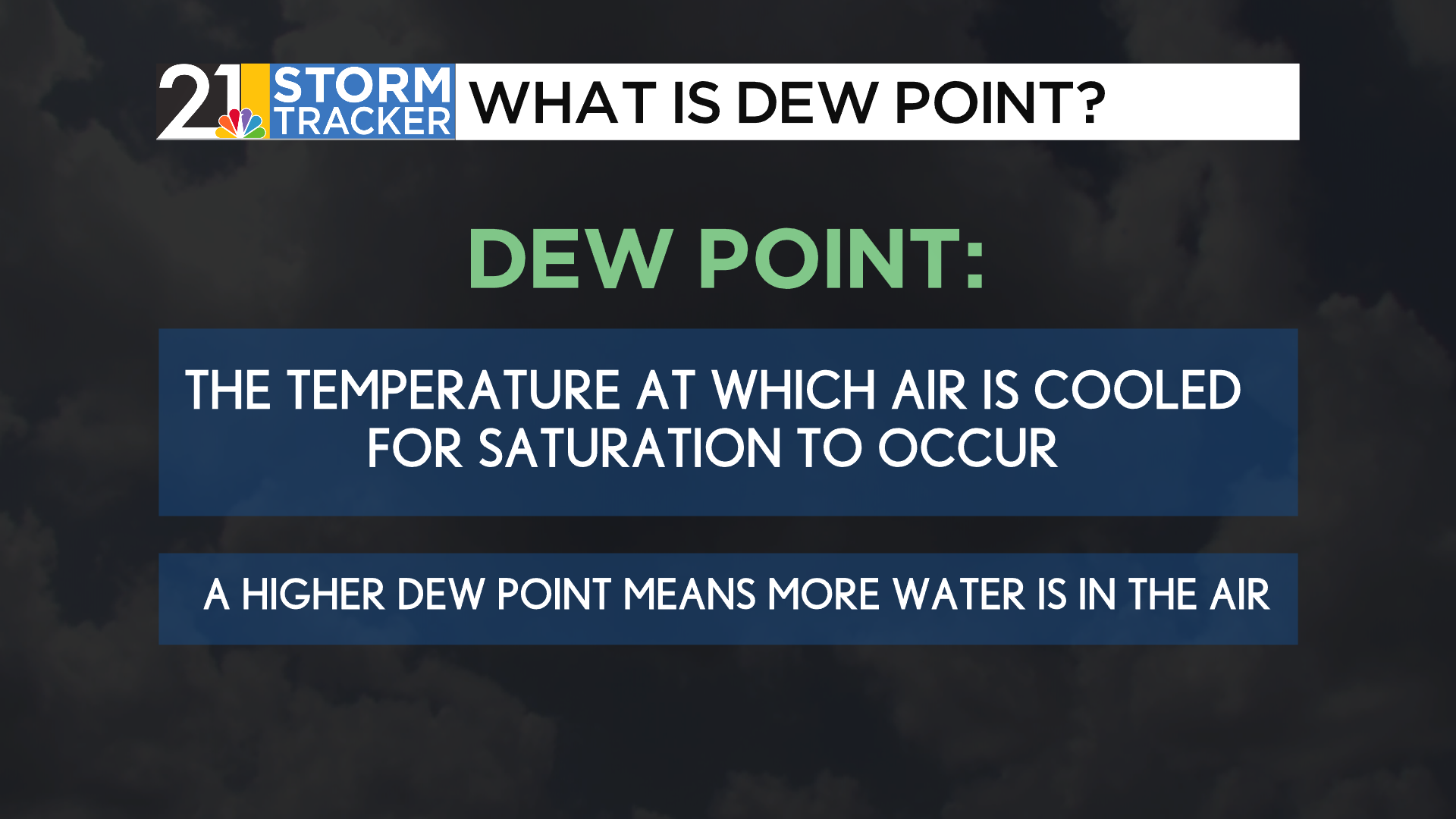
Dew point is a significant measure of human comfort. It is defined as the temperature at which air must be cooled down for saturation to occur. Like temperature, there is a “sweet spot” that most people find pleasant, as well as opposite ends that breed lots of discomfort. This relationship puts this variable in close relation to the temperature, and when the dew point equals the temperature, the air is completely saturated, and fog forms.
A major benefit of the dew point is its way of measuring the air’s total moisture content. As air temperature increases, its ability to hold moisture also increases. This means that an 80° day at 100% humidity will contain more overall water than a 50° day with the same percentage. In other terms, while a 60° day can only get a dew point of 55° if its air is very moist, a 90° day has much more room to achieve a 55° dew point, and then some. This is why we really only worry about mugginess during the warm season.
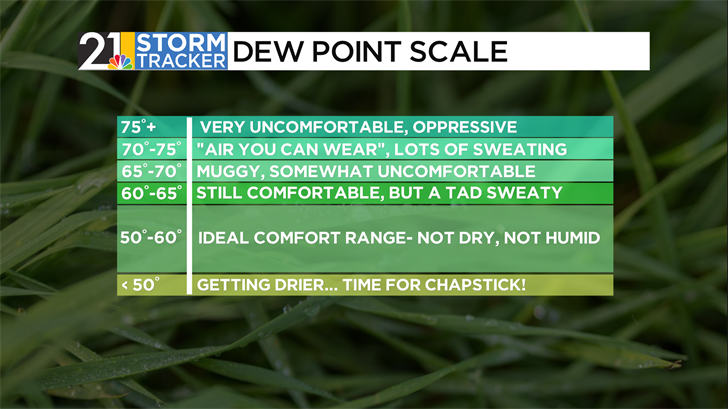
A dew point below 50° is typically categorized as being dry. This is the main reason why dry skin and chapped lips occur during the cold season, as the dew point cannot go above the air temperature. Typically, during the Valley’s winter months, dew points will only get as high as the 40s, even if it is an unseasonably warm and humid day. Dew points considered as “comfortable” fall between 50° - 60°, when there is not enough moisture to support constant sweating, but also enough in the atmosphere to not suck it out and dry your skin.
When air temperatures heat up in the summer, this unlocks a threshold for the dew point to get even higher. Once the dew point temperature gets above 60°, it begins to feel noticeably muggy outdoors. Most prominently, it will become tougher for the body’s cooling mechanism to work, and therefore, sweat will form. It begins to feel oppressive above 70°, where, coupled with high air temperatures, the air around will feel burdensome. In this region, heat index values tend to peak around the mid-to-upper 70s on the most humid days.
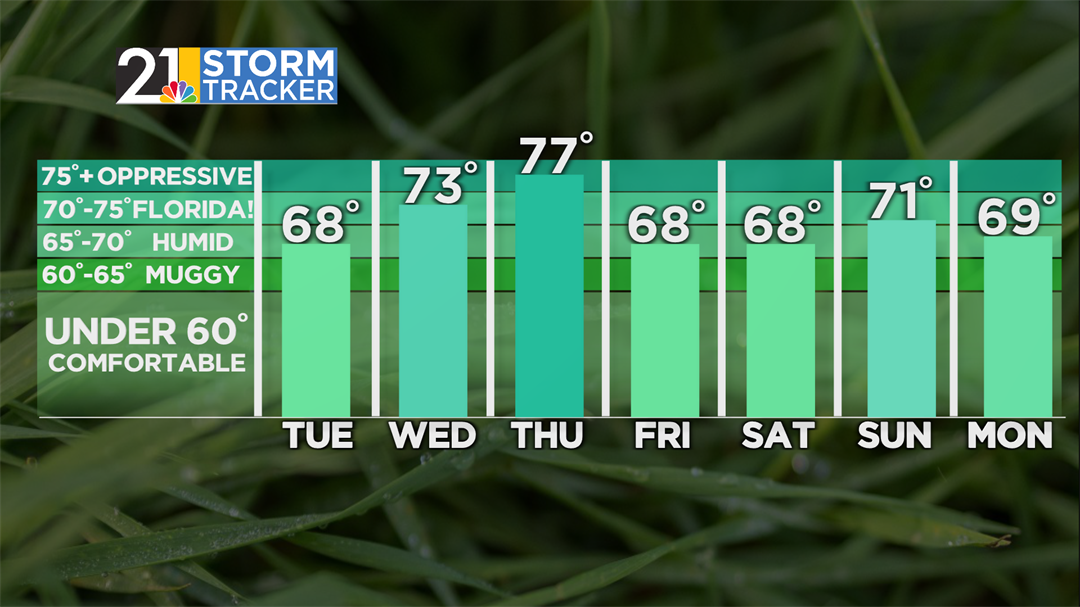
What is this week’s dew point trend, and what does this mean? After a warm and humid Tuesday, the Valley will become entrenched in its muggiest air mass of the summer, with Wednesday's weather featuring dew points in the low seventies and Thursday’s rain being accompanied by a dew point of 77°. A dew point this high signals incredibly moist air, and it will be very easy to sweat when there is a break in the rain. Past Thursday, it will still be humid, but dew points will level off in the upper sixties through the start of next week.