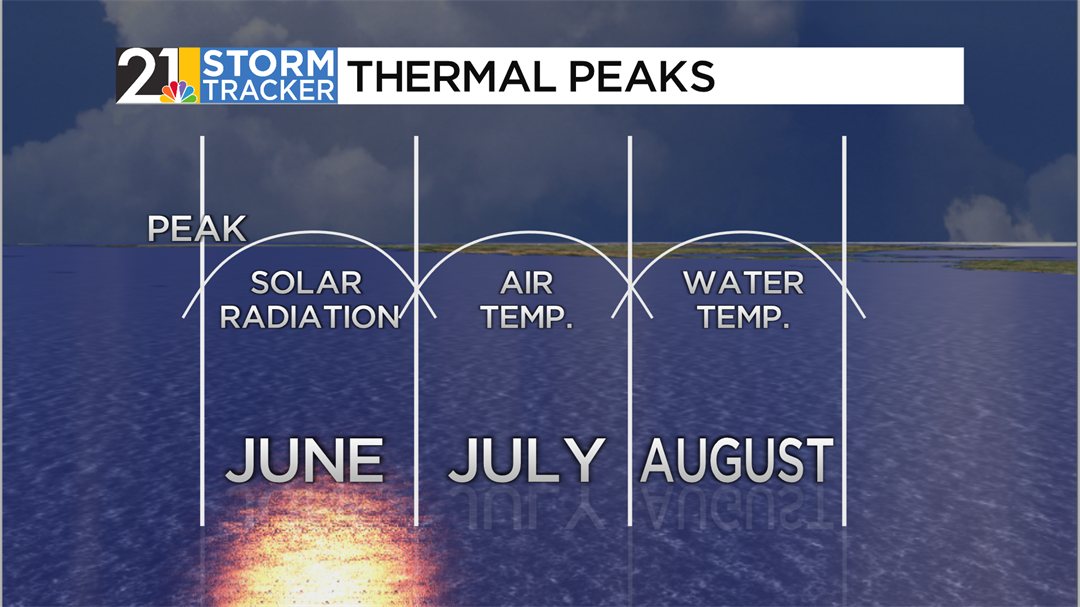
Why doesn't peak warmth align with peak sun angle?
The Valley is about three weeks removed from the summer solstice. However, climatically, we are now at the hottest time of year.
Interestingly enough, there is a 25-day separation between the Valley’s start to summer on June 21st, and the highest average temperature of 83° that falls in four days between July 14th & July 17th. Why that is can be attributed to how quickly Earth can take in heat, but let’s first fully understand how the sun’s position in the sky changes throughout the year.
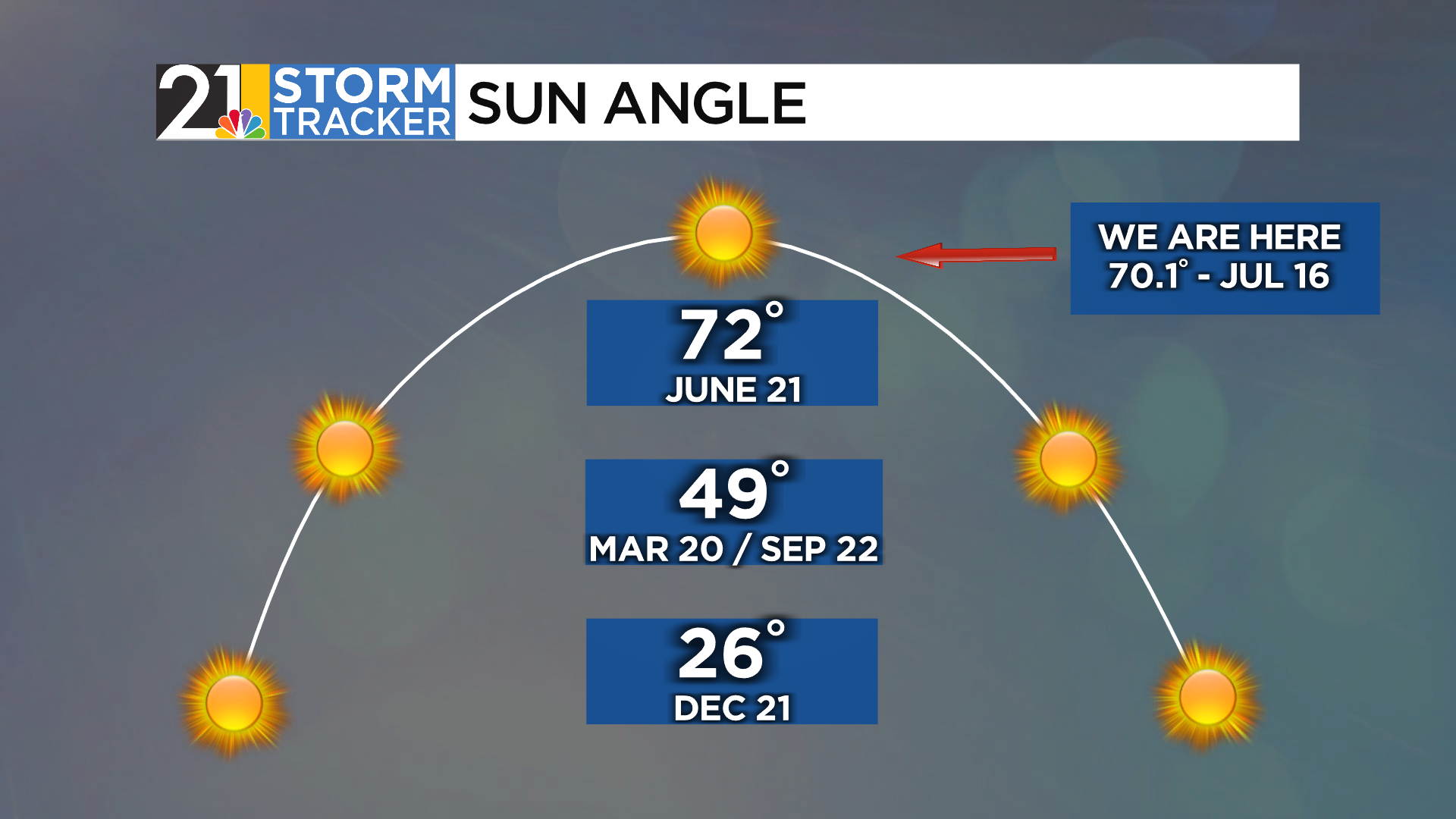
The Sun itself does not move in our sky. That is because Earth rotates, orbits, and tilts to show the sun in different ways. Each rotation of the Earth takes 24 hours, which is the basis for our days and the Sun’s rise and sets. It takes 365 days to orbit around the Sun, which gives way to our years on the calendar. Tilt, like using your body to lean forward and backward, is the way we get our seasons, and different sun angles in the sky.
Earth also tilts on a yearly scale. When it “leans” into the Sun from the Northern Hemisphere, we call that summer. When it “leans” away from the sun, we call that winter. It is important to note that both sides of the Earth experience different seasons at different times. The summer solstice occurs at the time when the Northern Hemisphere is at its maximum "lean" into the Sun. In 2025, this happened on June 20th, and can vary by about a day or two each year.
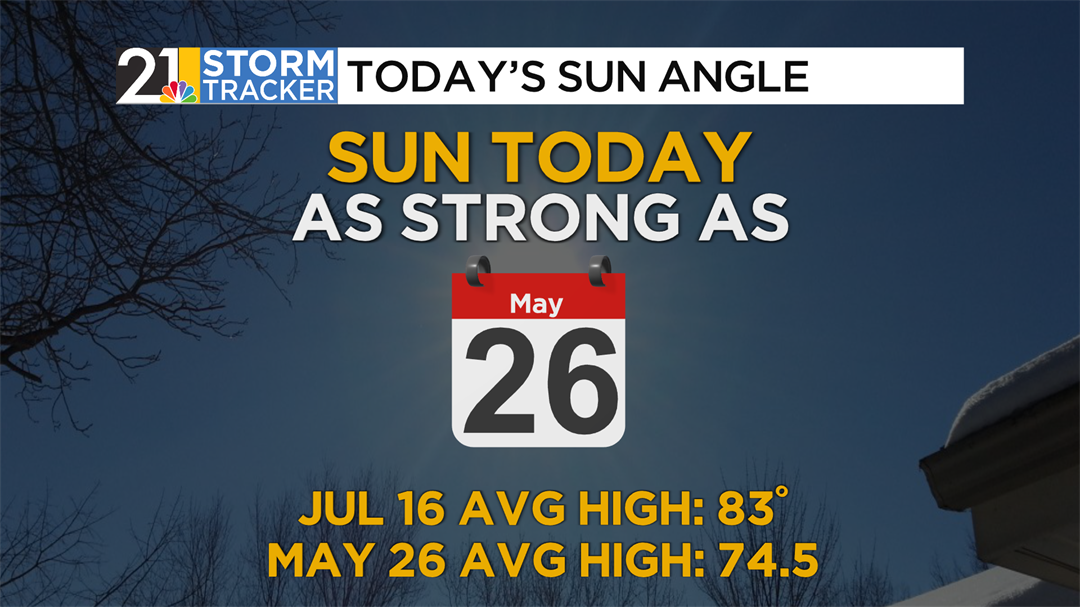
At this point in July, our planet is 25 days removed from the summer solstice, and the average temperature at the Youngstown-Warren regional airport is 83°. However, 25 days before the summer solstice on May 26th did not feature the same temperature. It was markedly lower, just sitting at 74.5° (a difference of eight and a half degrees). This means that the Sun’s power alone is not telling the full story of Earth’s heat.
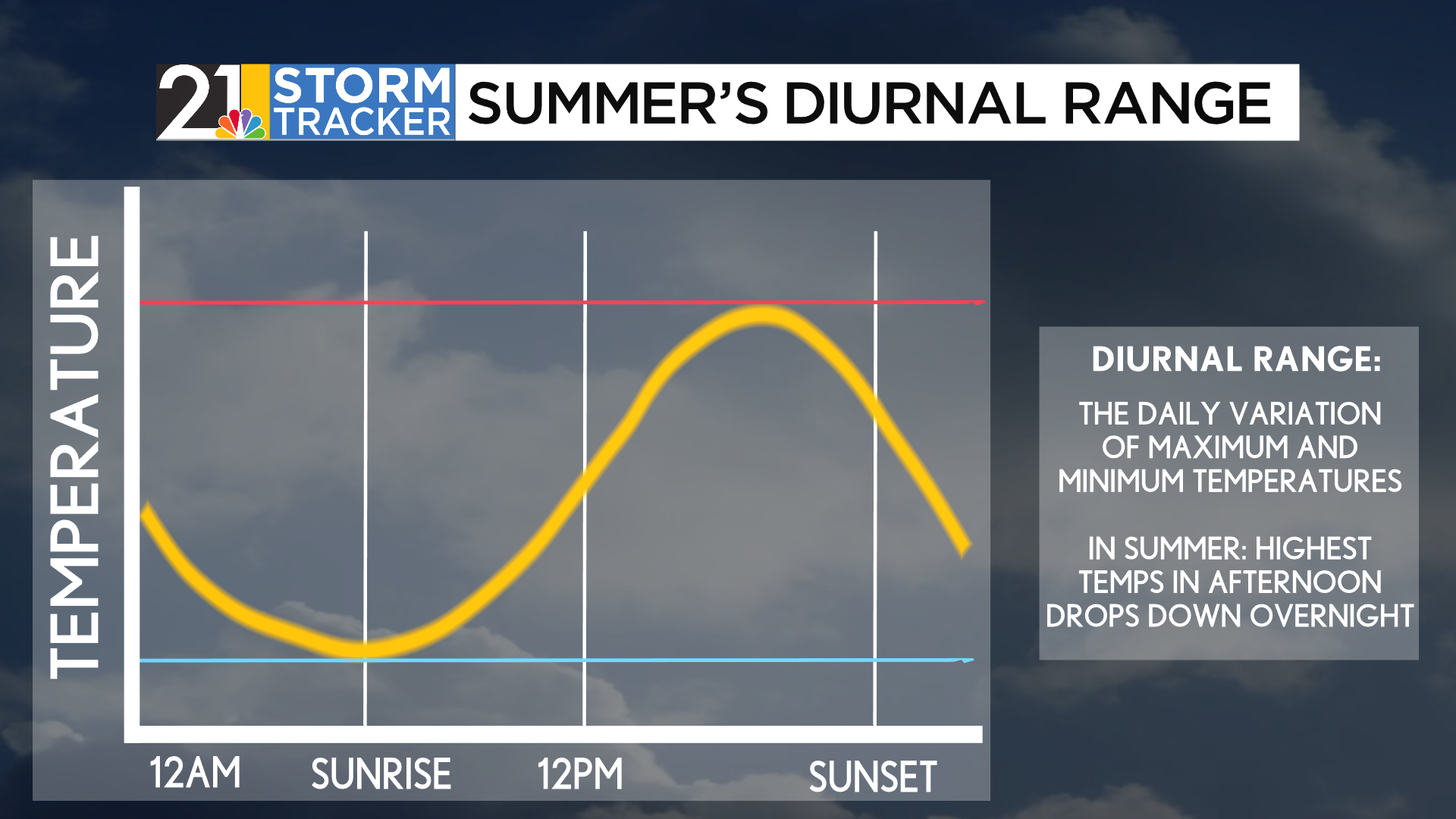
Diurnal range refers to the daily cycle of temperature fluctuations, which occur due to the Sun's influence and the area’s prevailing weather patterns. Typically, the cycle peaks in the later stages of the afternoon, when there is a balance between the Sun’s position in the atmosphere and a maximum amount of heat absorbed by the ground. This usually occurs a few hours before sunset, and is because Earth’s surface can store energy in addition to being hit by it. This means that even past solar noon, there is still a net positive gain in energy being taken in by the ground. The time when there is too much energy being lost and not enough sun to replace it is when the temperature begins to go down.
This relationship can be extrapolated into the year, as well. The summer solstice (around June 20–21) is when the Northern Hemisphere receives the most direct sunlight. But even though solar input starts to decrease slightly after the solstice, the Earth’s land and oceans continue absorbing more energy than they lose for several weeks. This is due to thermal inertia, the time it takes for the land, water, and atmosphere to warm up fully. Think of it like a heating pan: even after you turn off the stove, the pan remains hot for a while. It is only when more energy is lost than gained that temperatures begin their seasonal decline. This entire process is called seasonal lag and also occurs in the winter, for the opposite reason.